Alpha-in-waiting
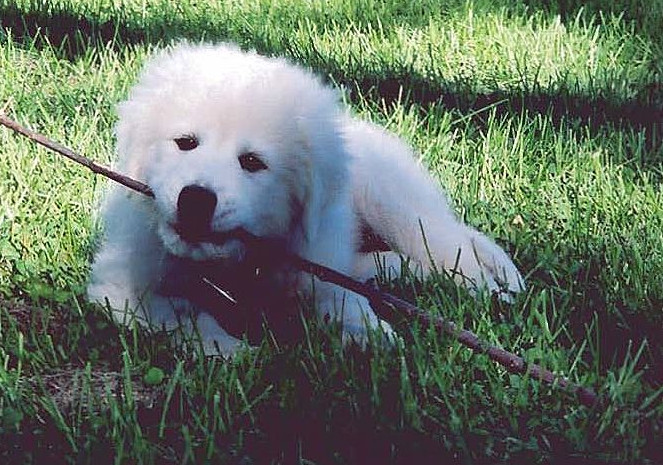
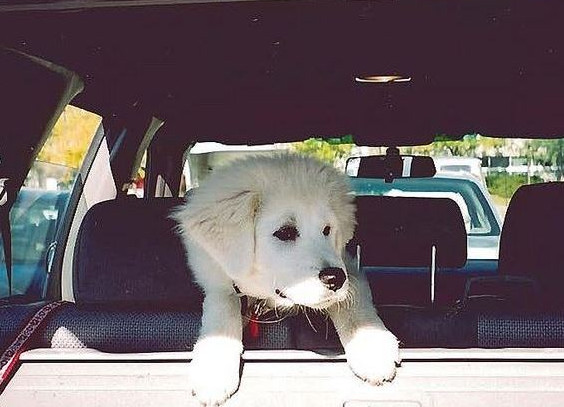
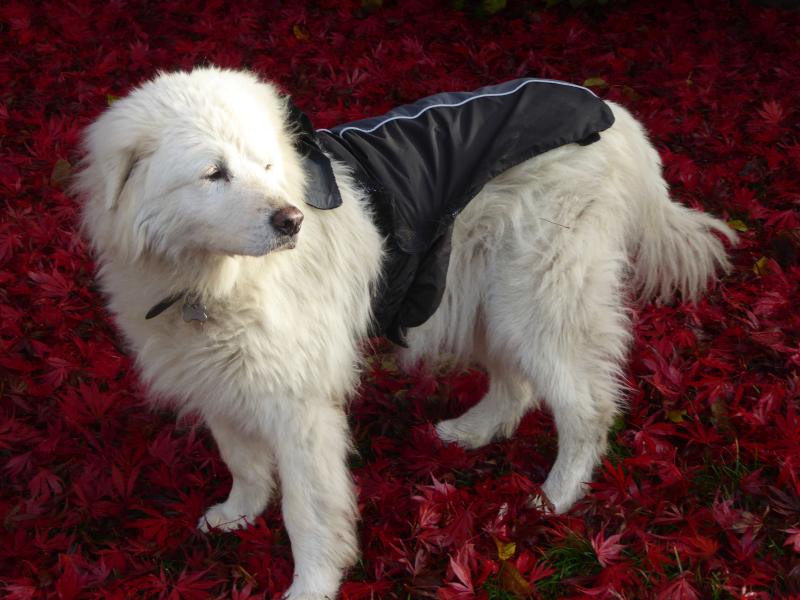
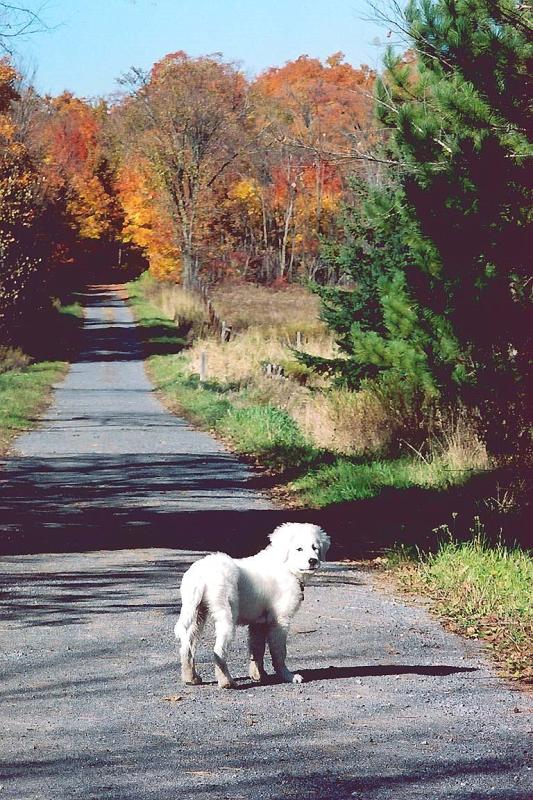
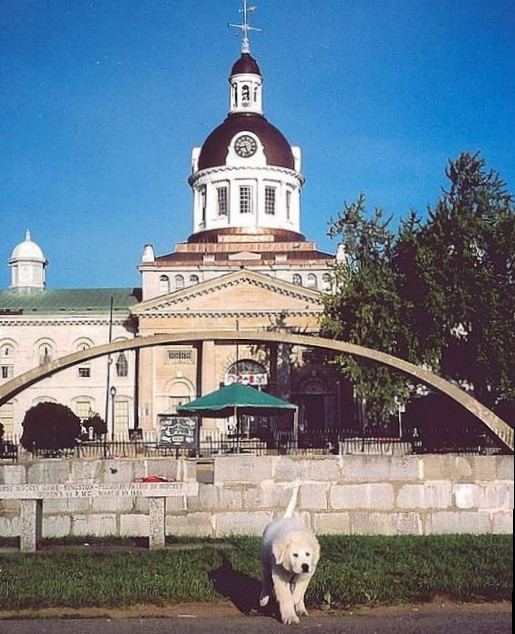
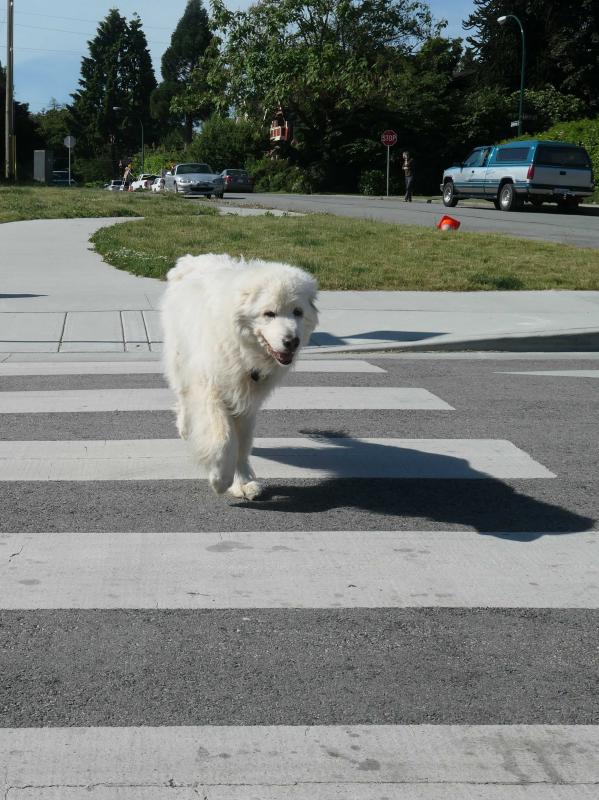
Billie was my first pet dog. She was bought, in the summer of 2004, from a farmer on Wolfe Island in Lake Ontario near Kingston when she was eight weeks old. The farmer said she was a pure Great Pyrenees, but did not show me any certificate. She looked the part so it hardly mattered. I named her after my favorite jazz singer, Billie Holiday, after taking her back to Kingston, where I lived for a year visiting Queens from Toronto.
Right from the start, Billie showed her independent side. She wandered when not leashed, and did not ever respond to recall. She did not fetch toys, and kept a distance from me. Great Pyrenees are supposed to be independent and intelligent because the breed has been continuously used as guard dogs for livestock. The fact that Billie came from a farm also meant that her family tree was one of work dogs, not pets. There was no “job” for her to do in an Kingston apartment, and for a proud work dog, it must have been very frustrating.
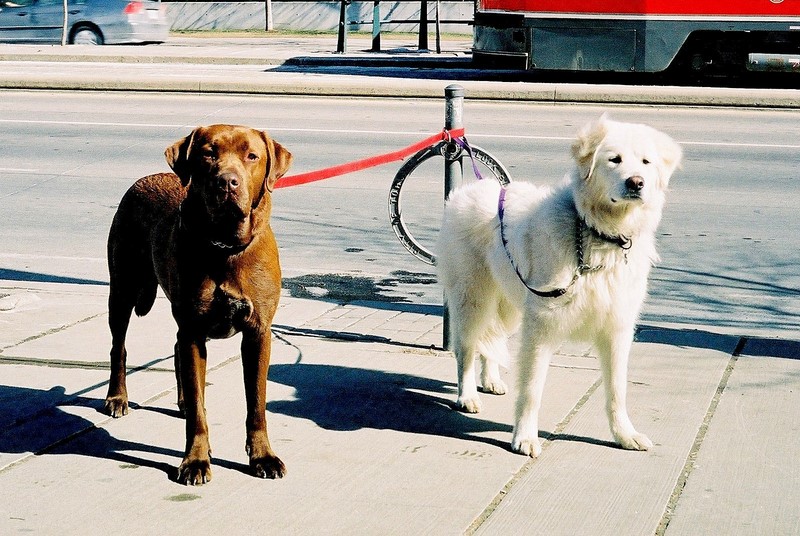
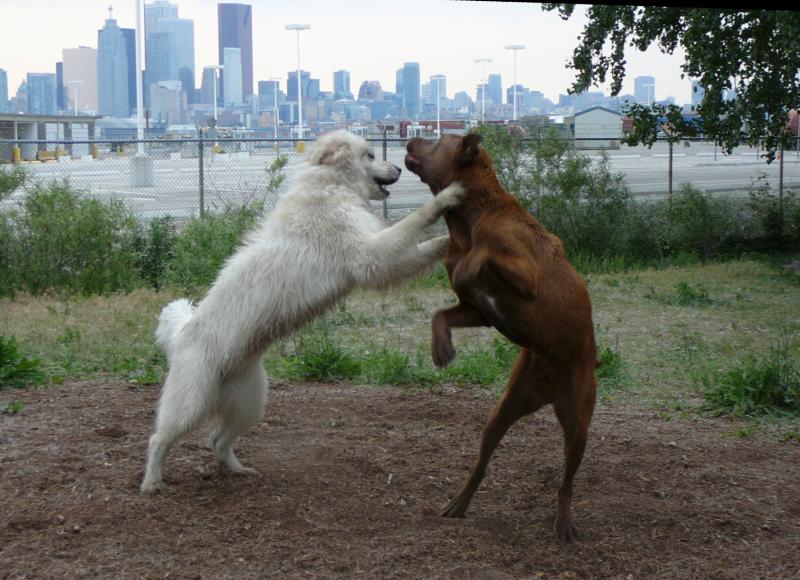
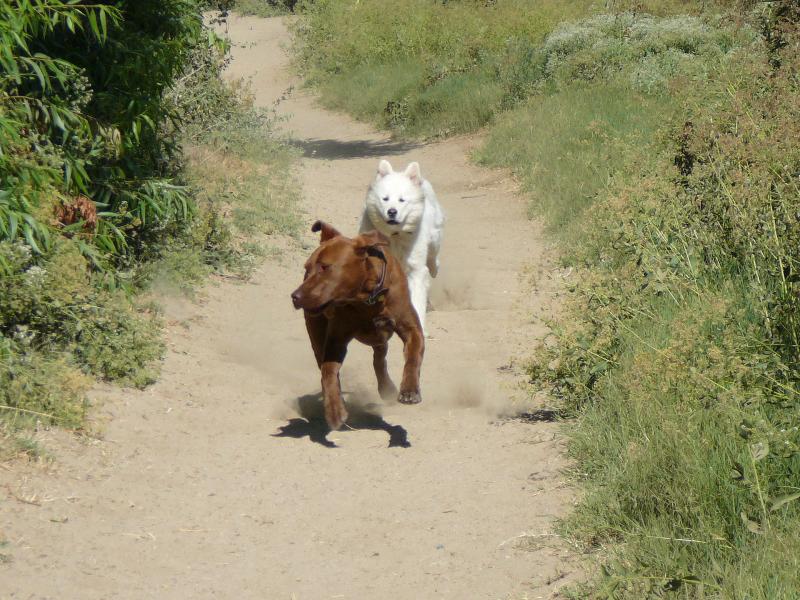
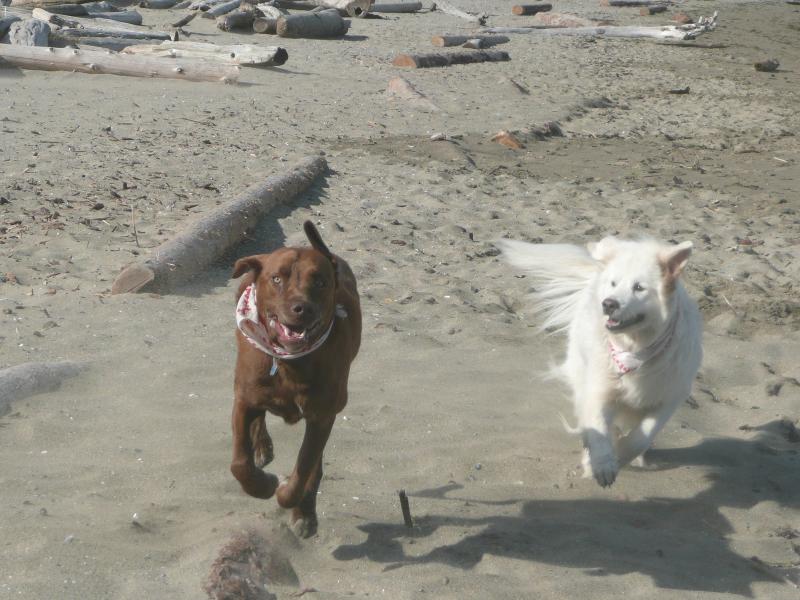
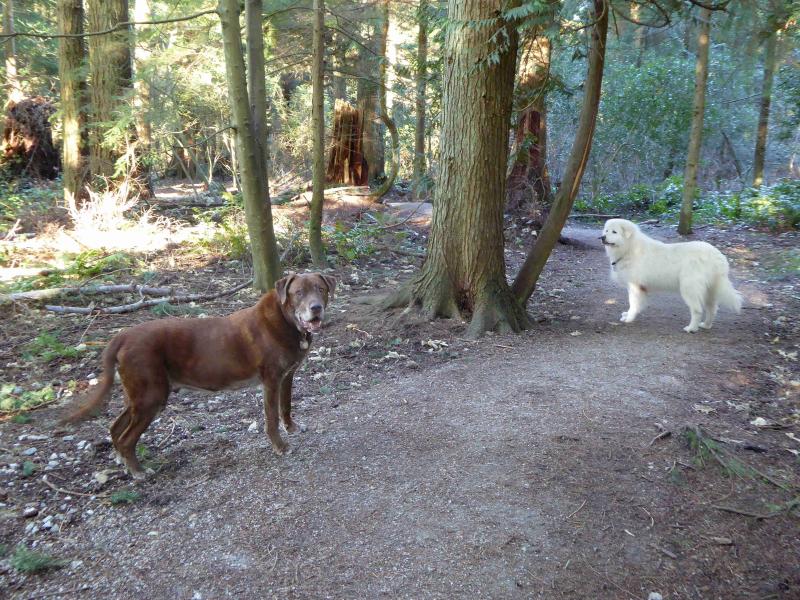
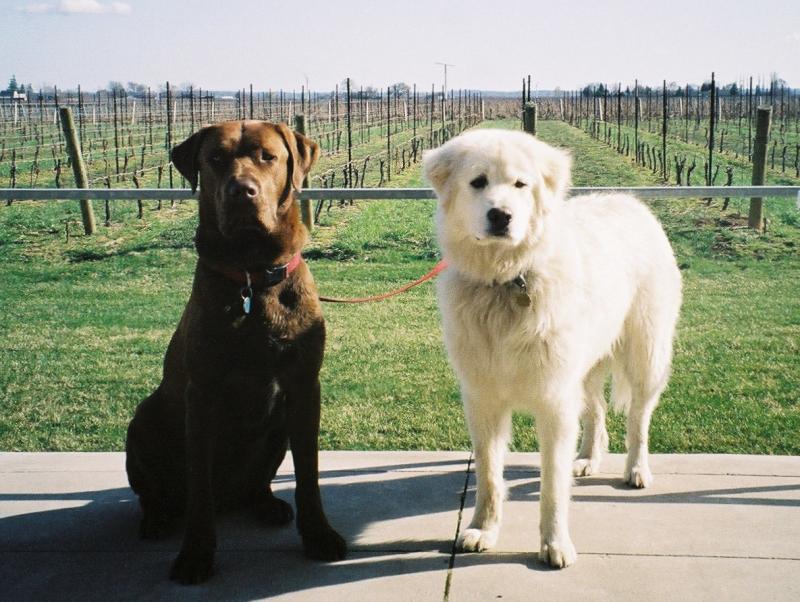
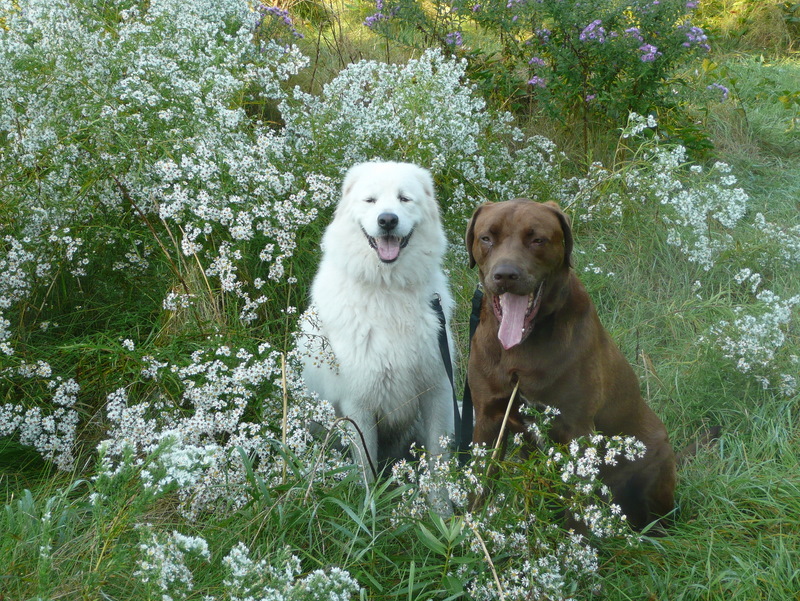
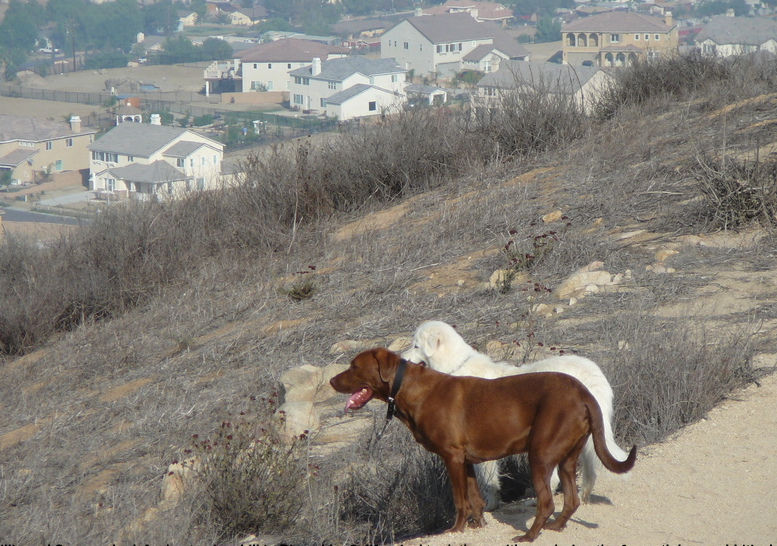
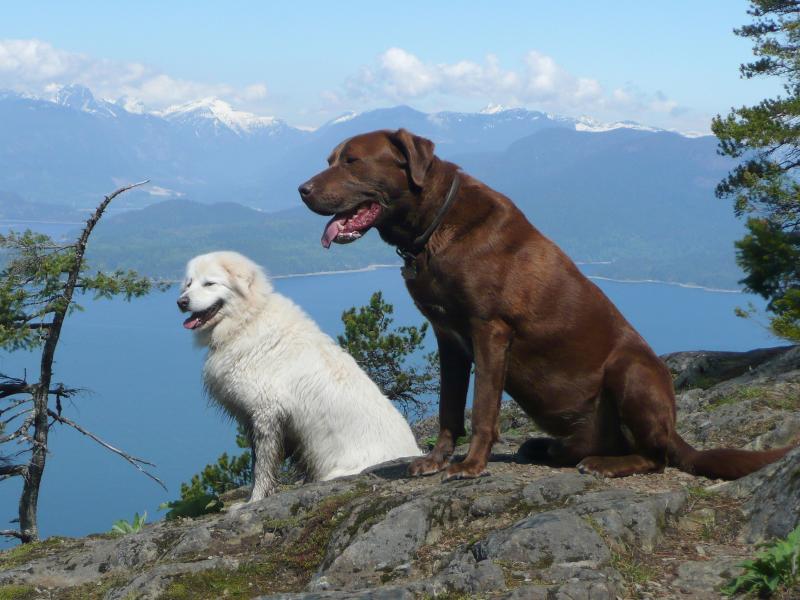
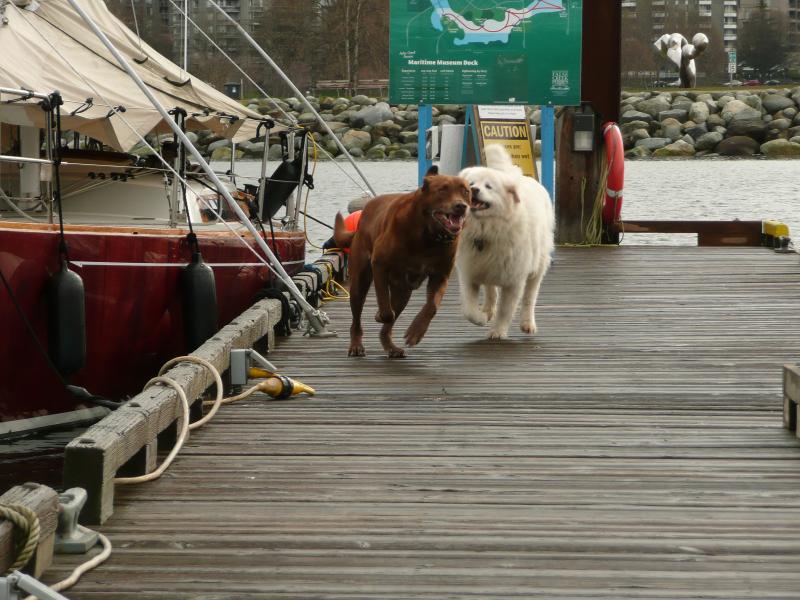
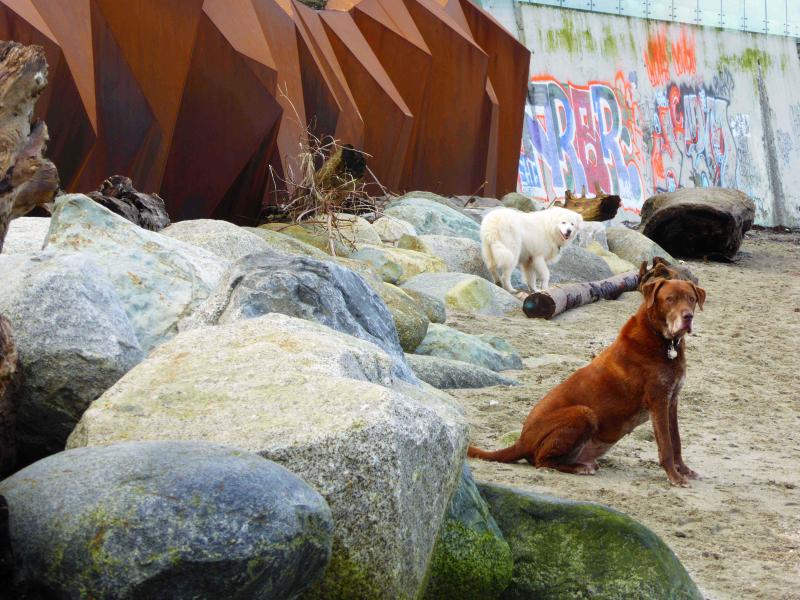
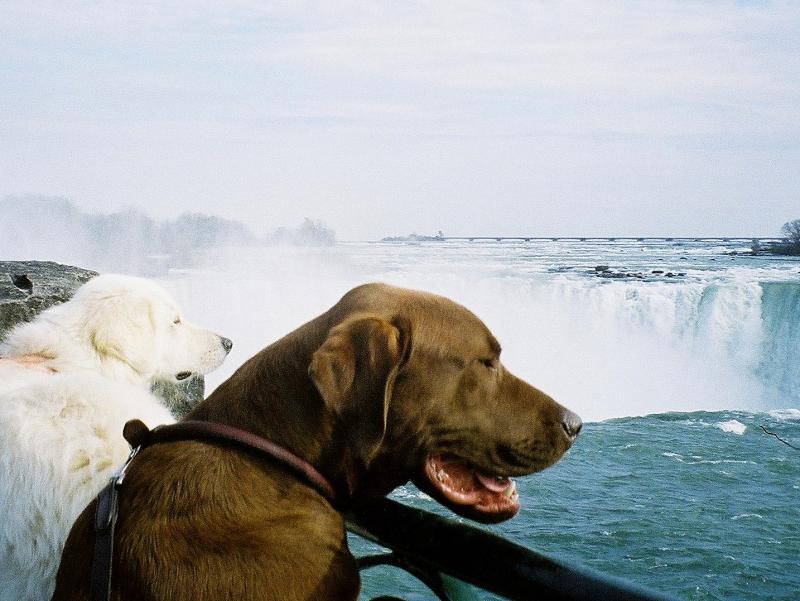
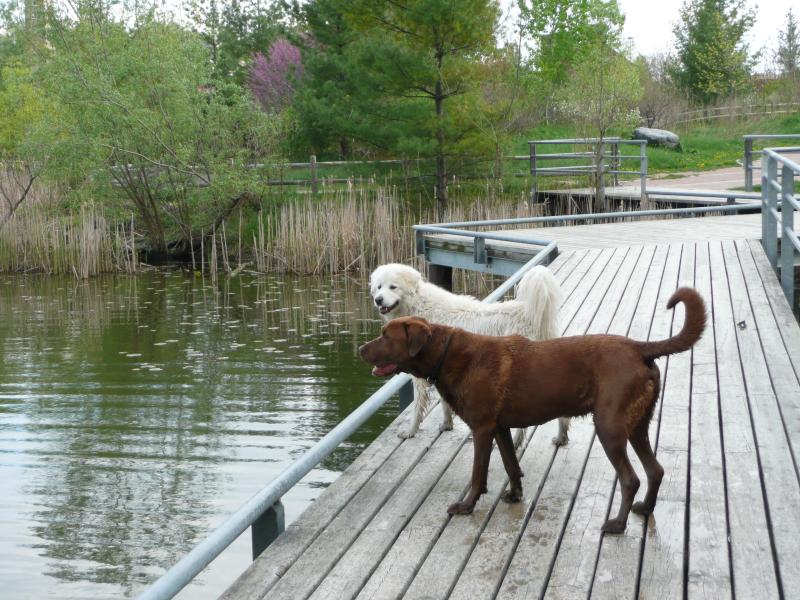
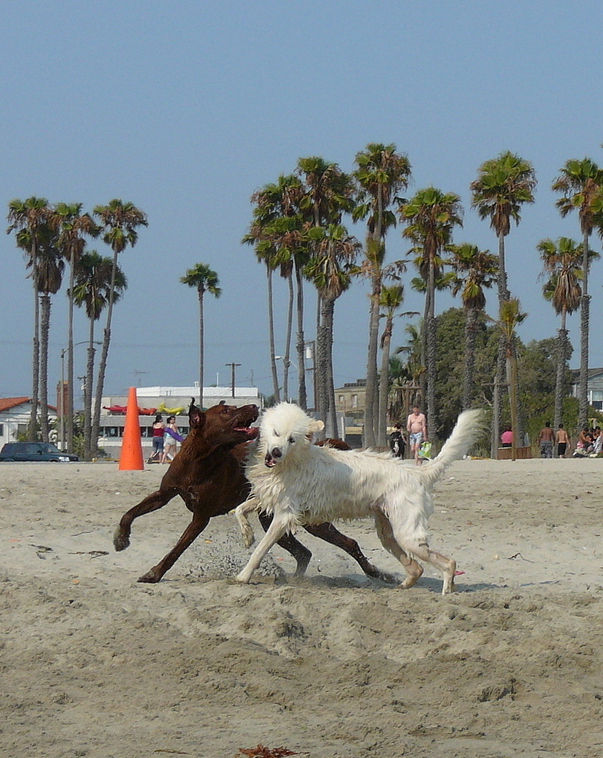
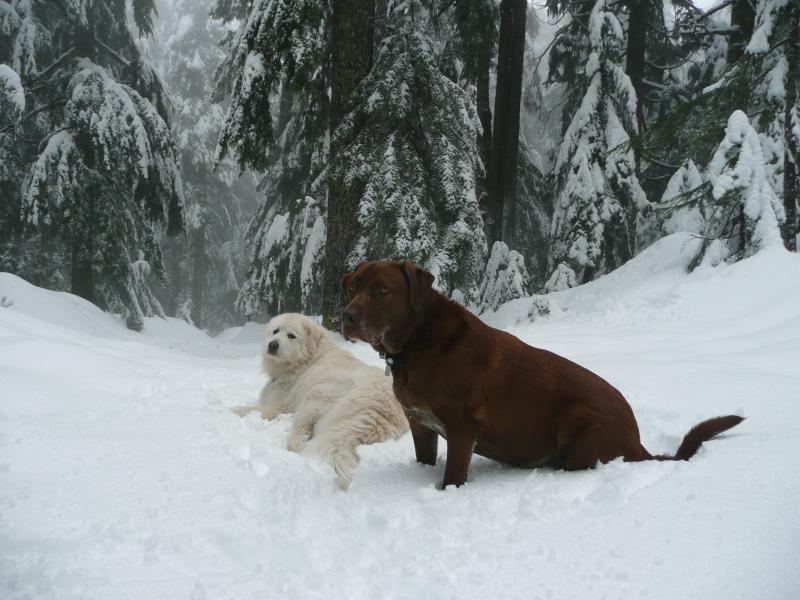
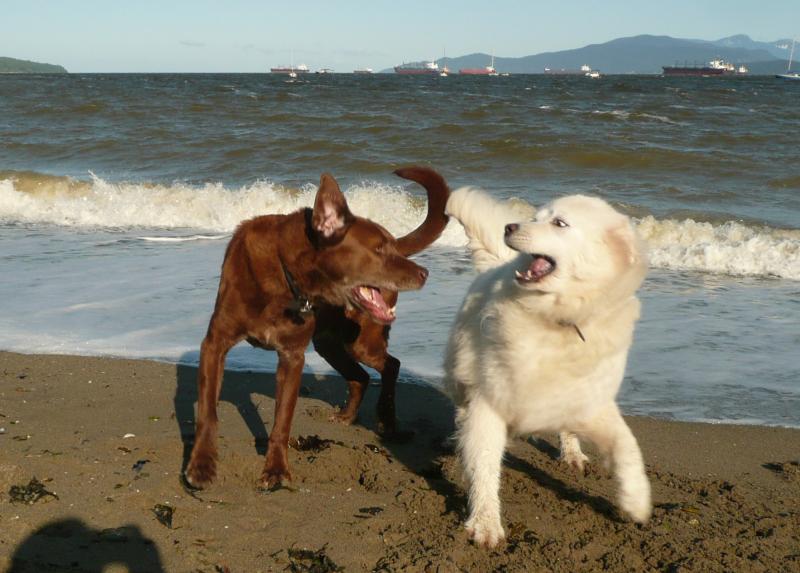
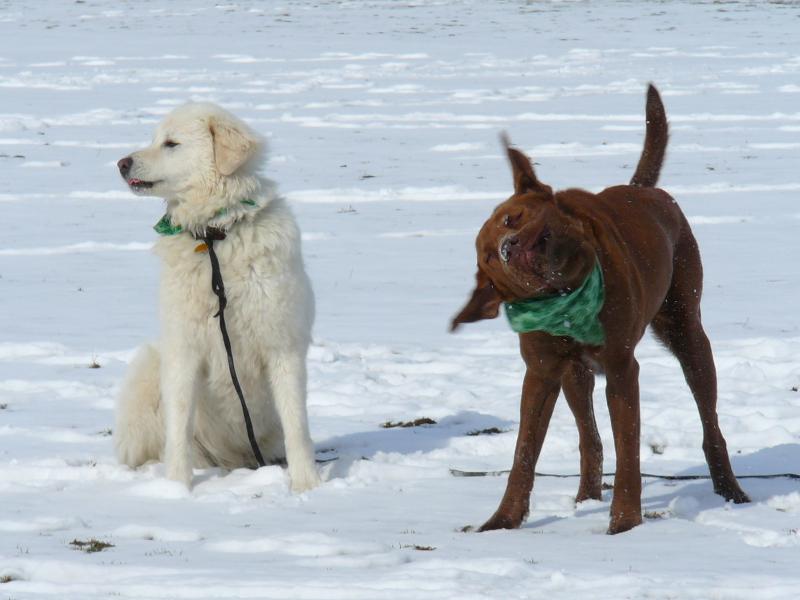
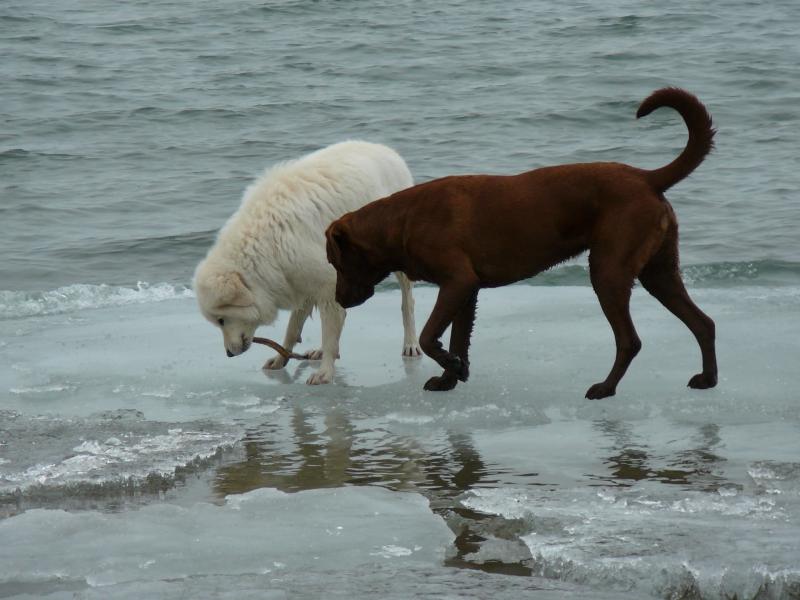
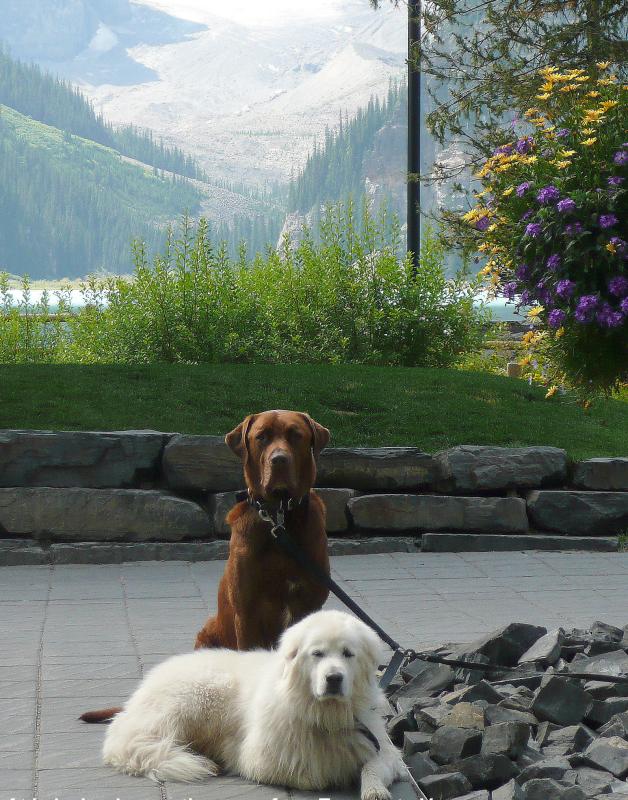
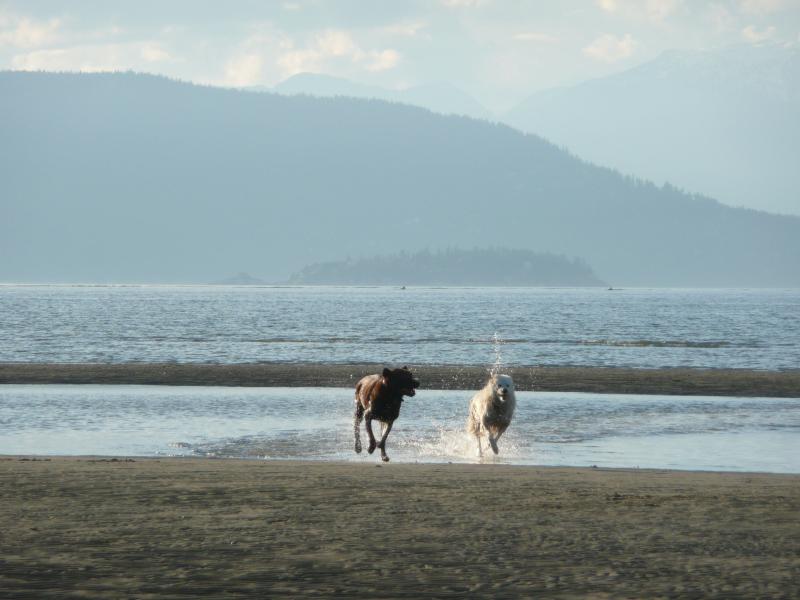
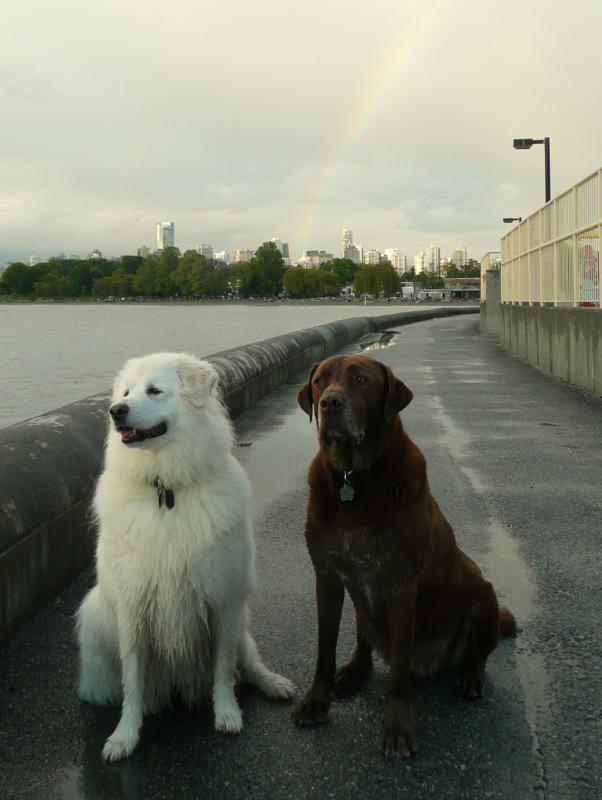
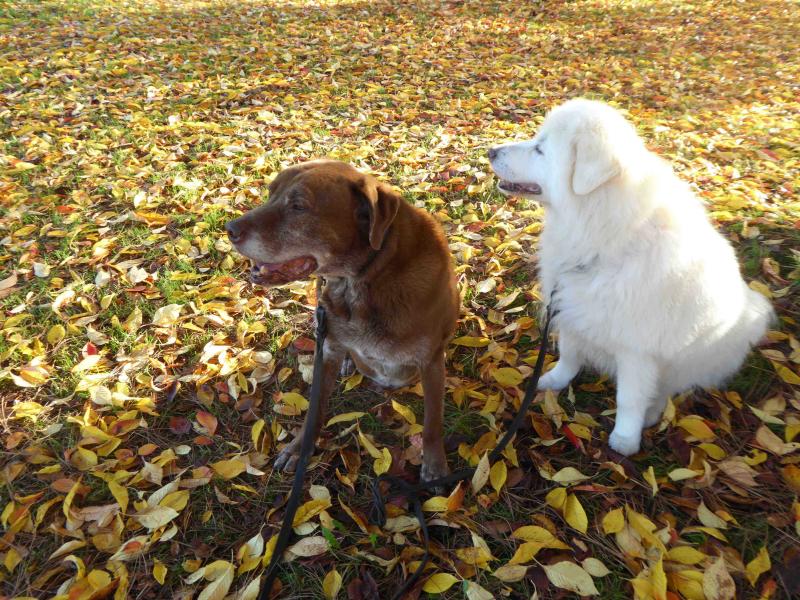
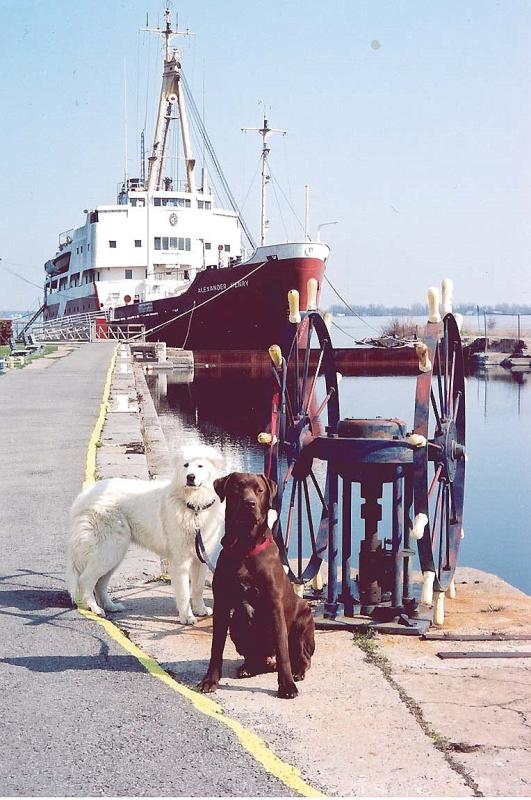
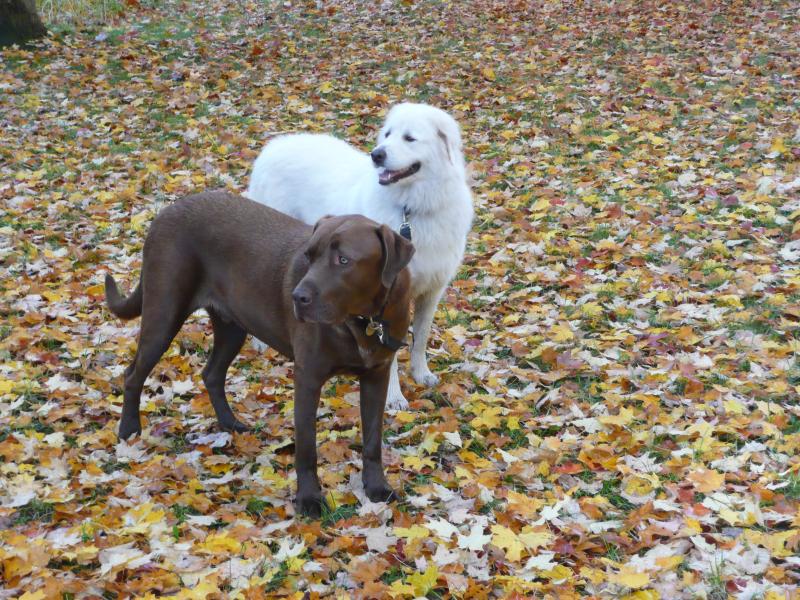
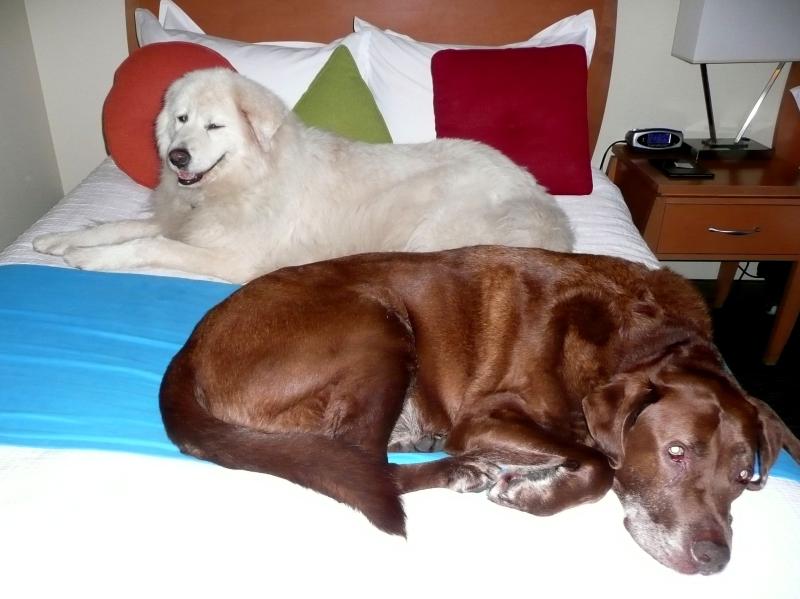
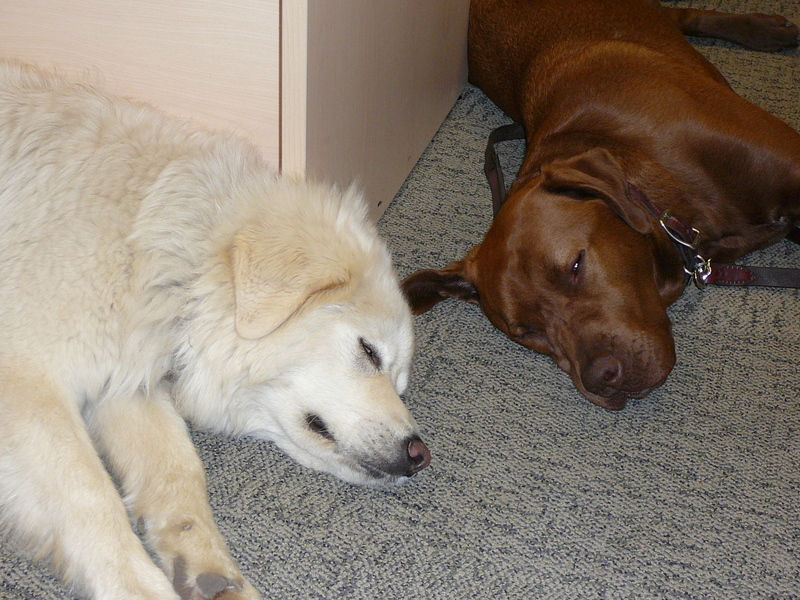
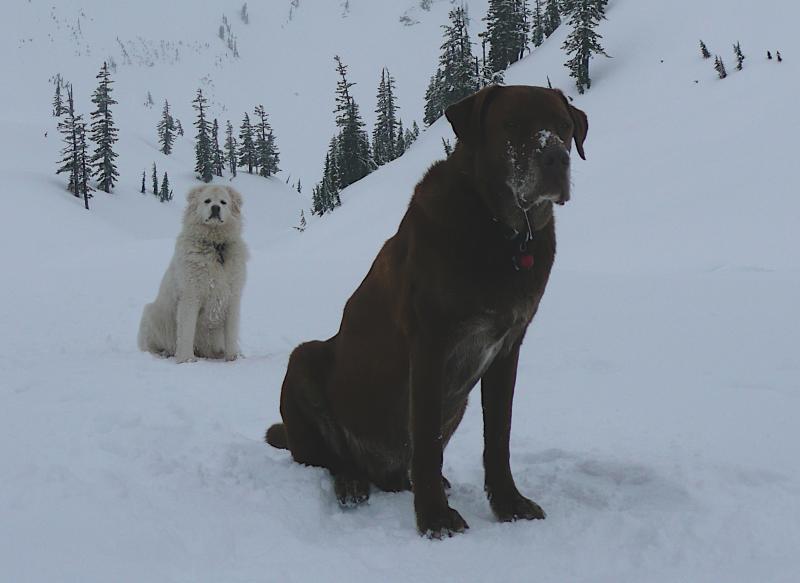
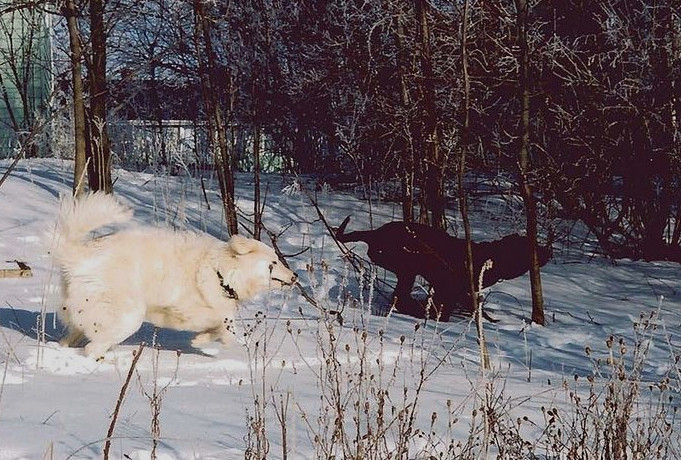
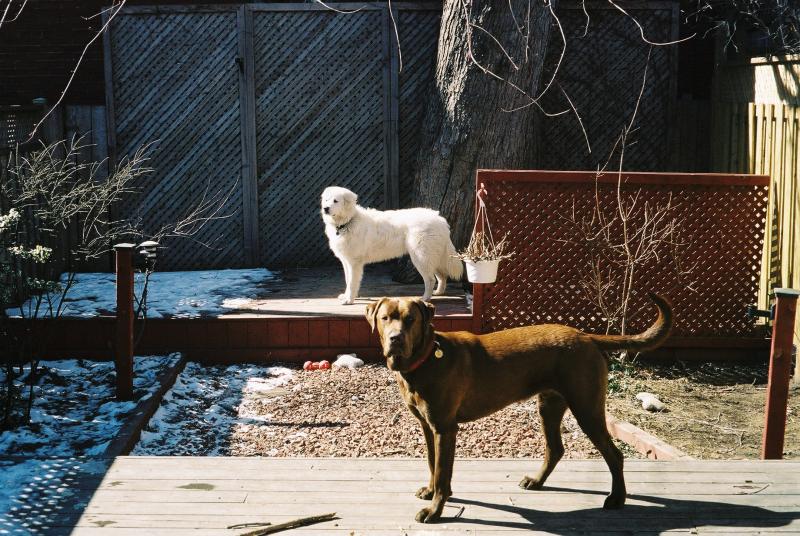
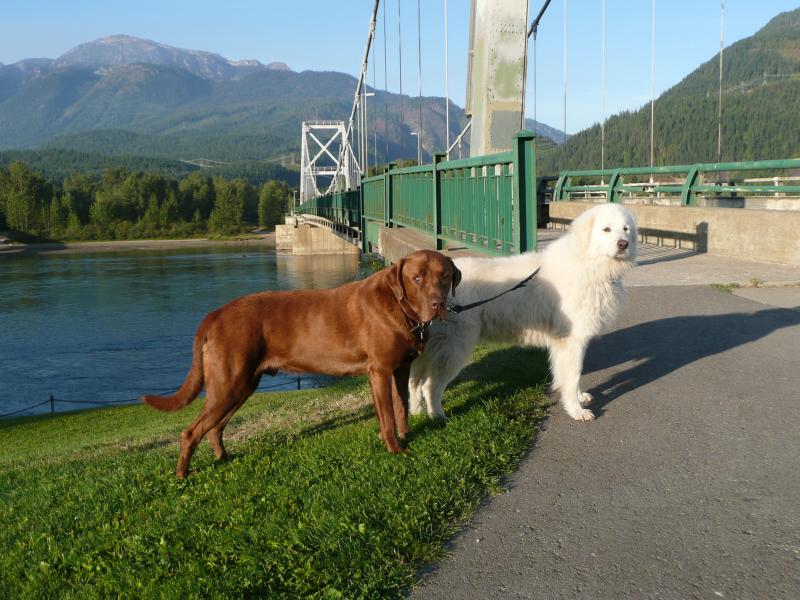
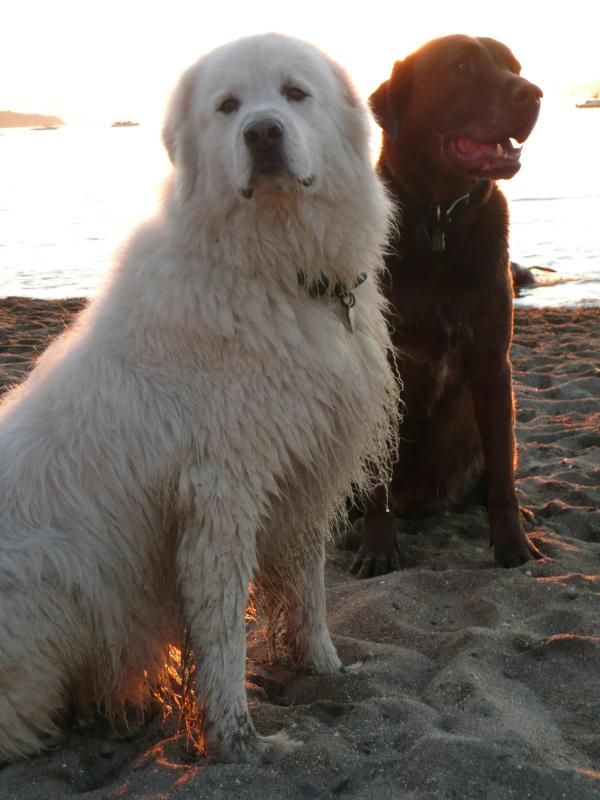
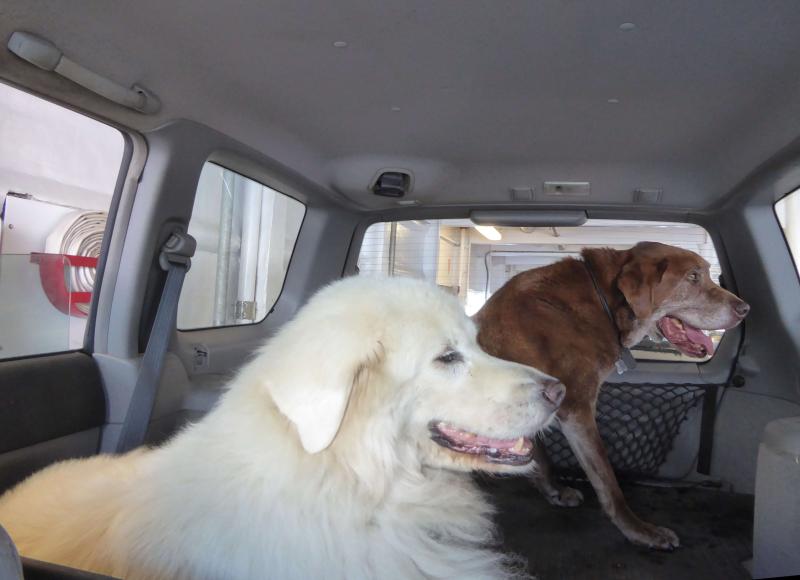
After one year at Queens, I returned to Toronto. By that time, I had acquired another dog. Sampson came from a neighbor who had some health issue and was having difficulty handling a big dog. He and Billie were buddies because they we both big puppies in a dog day care, so I adopted Sampson as a companion for Billie. Sampson was a mixed Neapolitan Mastiff and Labrador Retriever, and slightly younger than Billie. By the time I moved back to Toronto, Sampson and Billie were both fully grown. They were a striking pair. Sampson had chocolate brown short fur, and Billie had a spotless white long coat. They looked to have the same size, but Sampson weighed about one-hundred and ten pounds compared to Billie’s ninety pounds. They had exactly opposite temperaments. While Billie was aloof Sampson was extremely affectionate. When I sat on the sofa watching TV, Billie would stay at some distance watching me from corner of her eye, while Sampson would jump on the sofa to put his giant head on my laps and doze off. While Billie was too “proud” to play fetch, the Lab part of Sampson made him a willing and excellent participant. But a game of fetch would always end up with Billie chasing down Sampson and pinning him on the ground, or more accurately, with Sampson leading Billie on a chase and throwing himself on the ground for Billie to grab him by the throat.
In spite of being significantly larger, from the time of adoption, Sampson seemed to have accepted Billie as his boss, and he did so willingly. Sampson was a happy, and sometimes goofy, beta-dog. Billie, on the other hand, was not quite an alpha, at least when she includes me in her group. Billie was an alpha-in-waiting. That was what I was told by Bark Busters, an international business that runs dog-training sessions in Toronto. I contacted Bark Busters because I was frustrated with not being able to make Billie follow my commands willingly, and they sent me a trainer to meet with Billie at my home. The first thing the dog trainer said to me was that I should give up on the idea to make Billie a happy beta-dog like Sampson, because she was by breed either an alpha dog, or if she couldn’t be that, an alpha-in-waiting. What that meant, the dog trainer told me, was that Billie would not change into a Sampson, and the best behavior I could get from her was she accepted me as the alpha in the family as long as I acted as one. But the same time, Billie would always find her ways to challenge me, from time to time, to see whether I was still able to perform like an alpha.
For social animals, challenges by an alpha-in-waiting are Nature’s way of ensuring that when the time comes there is a capable leader to take over. Similar issues exist in human organizations. One complication that Nature or an organization has to deal with is that frequency and level of challenges have to be delicately balanced. Challenges that are too frequent and or too disruptive negatively affect performance of the current leader and hence welfare of everyone in the group. But if challenges are not sufficiently frequent and or severe, they will not be able to pose a credible test of the ability of the current leader to continue. Another complication is that response to challenges by the current leader also needs to be delicately balanced. In the animal world as well as in human organizations, no current leader wishes to relinquish their position “unfairly” and the key question is what determines whether the time has come, or not, for transfer of power from the current leader to the leader-in-waiting. Whereas humans voluntarily subject ourselves to social contracts and institutions, which are carefully designed in successful organizations, in the animal world the design by nature is hardwired through programming by evolution. And the programming must include how tolerant the current leader is for unsuccessful challenges. If the currently leader punishes the leader-in-wating after an unsuccessful challenge too severely, future challenges would be deterred and transfer of power may not occur even though for the benefit of the group the right time has come. But if the currently leader is too lenient, they would be inviting premature or even frivolous challenges to the detriment of the group.
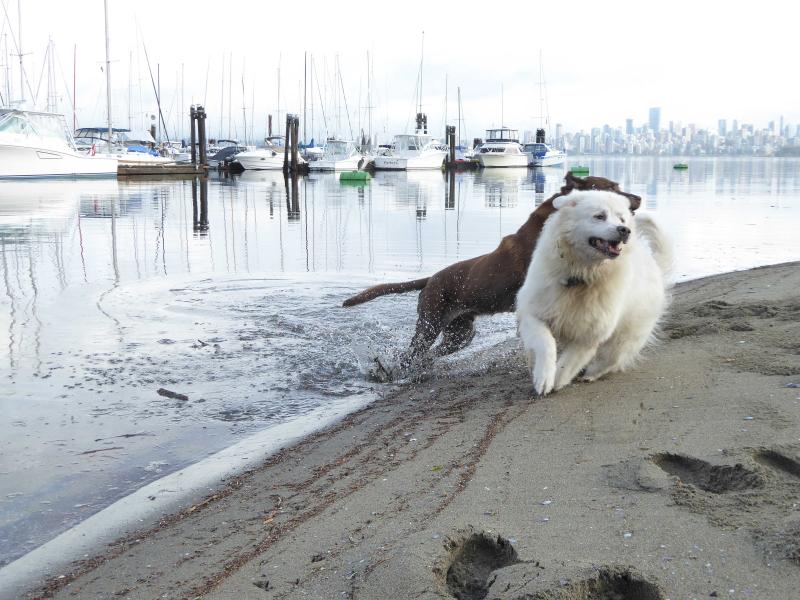
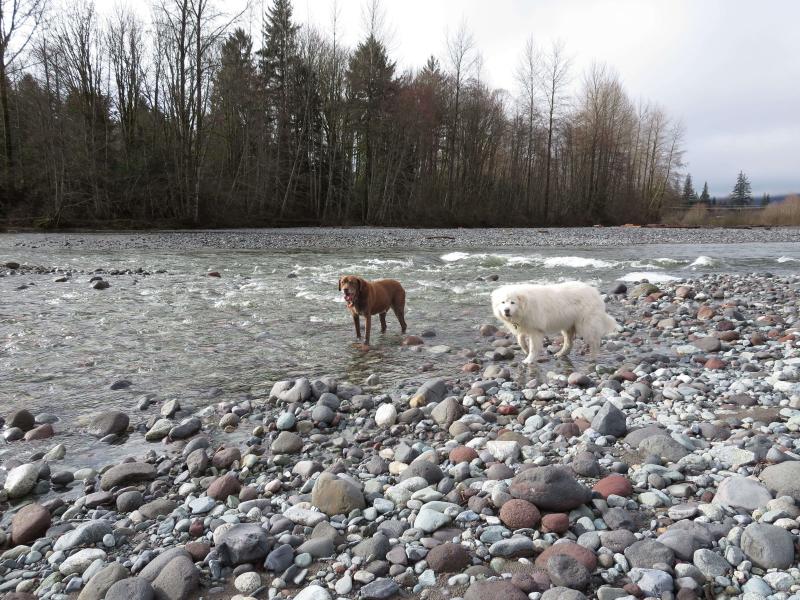
So that was Billie, and Sampson. We stayed in Toronto until 2009 when I moved to UBC in Vancouver. Together we had a very active lifestyle. I also took them on seminar and conference trips, to Ann Arbor, Columbus, Chicago, Columbus, Washington DC, and even a six-month sabbatical at USC in Los Angeles, California. It was for the sabbatical that we made our first cross-continent round trip, crossing the Appalachian mountains and Arizona desert, in my Subaru Forester. It was also their first time to swim in the Pacific Ocean. Sampson, being a retriever, is a born swimmer, while Billie, being a mountain dog, initially could only wade in the water but eventually learned how to swim from Sampson. For seminar and conference trips I couldn’t take them, I boarded them at a dog ranch in a Toronto suburb. Every time after an emotional reunion for both of them and for me when I picked them up, Billie would remember to test me by barking at the wind, struggling with the leash, and generally misbehaving a little. She wanted to make sure that I am not ready yet to make her the alpha of the family.
In 2009 we moved from Toronto to Vancouver. The cross-continent trip took us a week. This time we followed the trans-Canada highway. There was not much from Toronto until we reached Calgary. We took a detour and went to visit Lake Louis. It was a hot summer, and they were happy to jump into the lake to cool down. When we reached British Columbia from Alberta, Billie and Sampson got very excited with side tours. We trekked through some original forests and mountain streams. They were in their primes then, and catching up with them was not so easy for me. On occasions when I slipped and fell, Billie would show her true character of alpha-in-waiting by charging forward without waiting, while Sampson would turn around to see if I was OK. Then he would be standing between Billie, who he really wanted to follow, and me, who he obviously cared about, without knowing what to do. It was a funny memory.
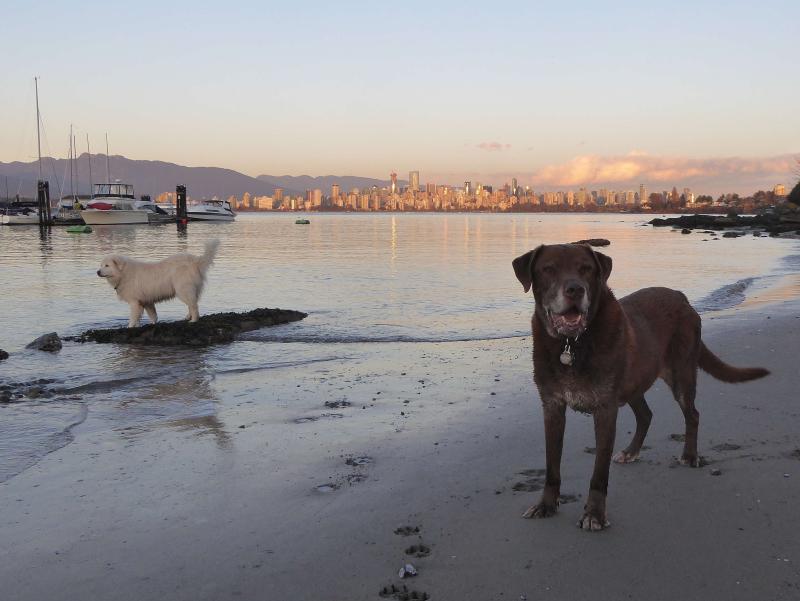
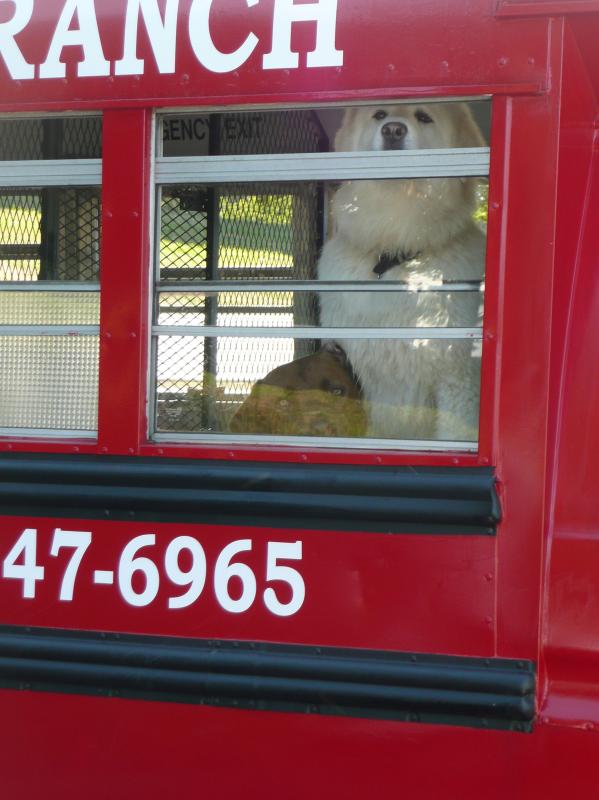
Summer in Vancouver was a Dream Come True for Billie and Sampson. Back in Toronto we would go to the Cherry Beach of Lake Ontario once in a while, but in Vancouver the Kitsilano beach was accessible for morning and afternoon walks every day. Back in Toronto there woods in Don Valley Park that offered a few longer trails for them to explore, but in Vancouver just the Pacific Spirit Regional Park by UBC offered endless leash free forest trails, not to mention Stanley Park in downtown, Lighthouse Park in West Vancouver, or Capilano River Trails in North Vancouver. Our absolute highlight was Mount Gardner on Bowen Island. When I couldn’t take Billie and Sampson on a trip, I boarded them at the Bowen Island Dog Ranch. Although they had a bus for pick-up and drop-off, I sometimes took the car ferry from Vancouver to Bowen Island and drove them to the ranch. On one of those trips, I decided to climb Mount Gardner on Bowen Island with Billie and Sampson. It took us full 3 hours to go up to the top, and 2 hours to come down. At the end every one was exhausted.
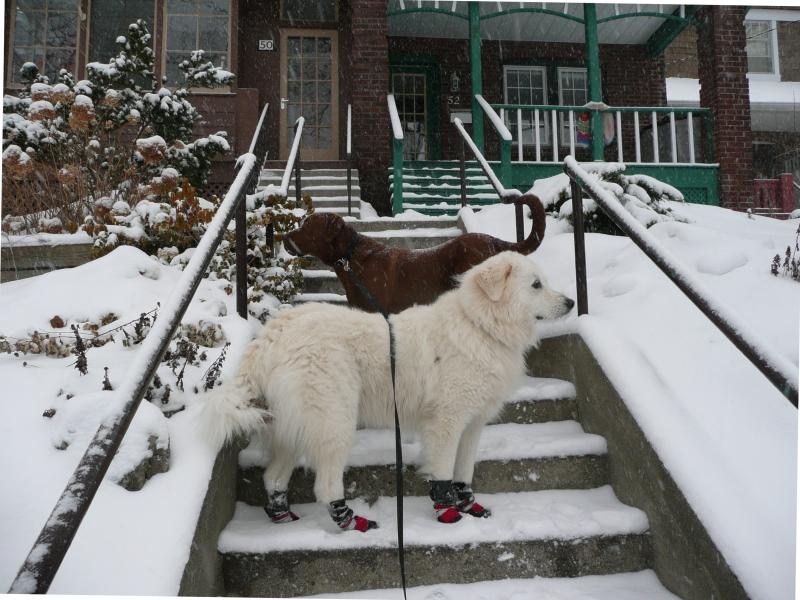
Winter in Vancouver was so much milder than in Toronto. They used to wear snow boots in Toronto’s harsh winter, not so much for the cold ice and snow, but because road salt was really bad for their paws. Lake Ontario would freeze, and Cherry Beach was not so much fun. In Vancouver’s winter, they would still go to the beach every day. The water was cold but they did not mind. Billie and Sampson also liked to play in the snow, and for serious fun with snow that I took them with me to snowboarding trips in Cypress Mountain. I would snowboard for a few hours while they stayed in the car at the bottom of downhill lifts, and after I was done we drove to the cross-country trails for them to play as long as they wanted.
Sampson slowed down first. He had a heavier body than Billie, and his legs had to work harder to carry all that weight. By 2015 neither of them was able to jump up onto the back of my Subaru Forester. I bought a ramp for them, and it worked well as we continued our active life style. Sampson and Billie were no longer running on our walks, or chasing each other on the beach. When I boarded Billie and Sampson for the last time in the summer of 2016, people at the Bowen Island Dog Ranch told me that they were concerned with Sampson as he was not eating well. The end of Sampson came quickly in the fall of 2016. On one evening walk he lay down on the sidewalk and was not able to get up. After Sampson lying on the floor for two more days without drinking or eating, I had to make the difficult choice to let him go. Sampson took his last breath while he, Billie and I all looked at each other. Sampson had given his unreserved love to Billie and me in his 12 years, and he was loved back by us.
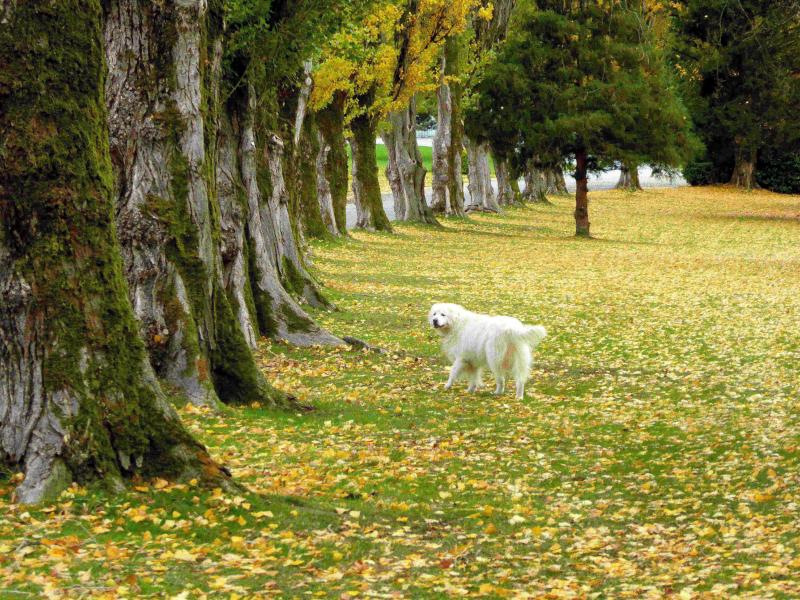
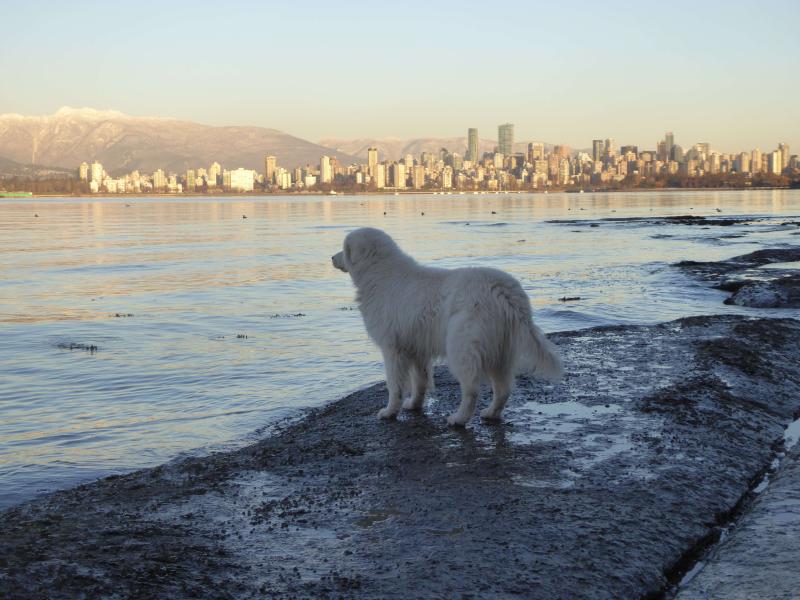
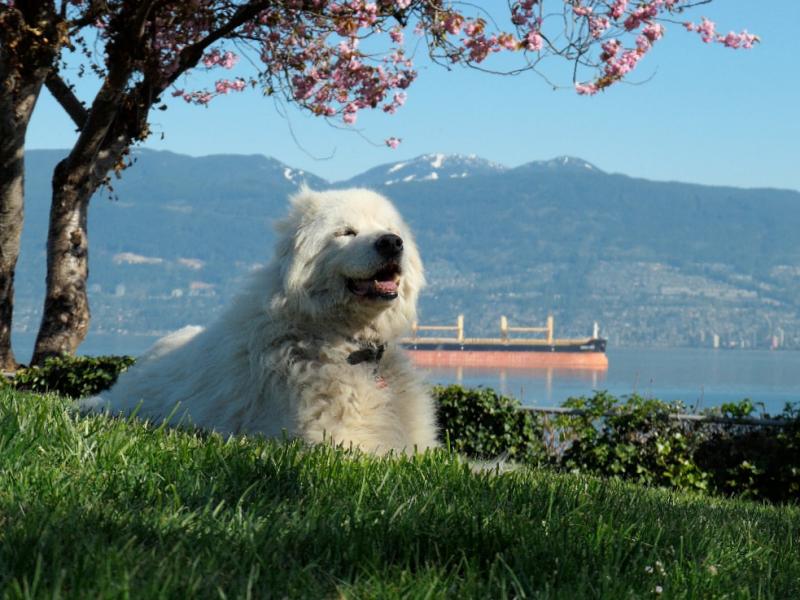
I could tell Billie missed Sampson after he was gone, but she took it better than I did. I was told that because Billie was Sampson’s boss, it was easier for Billie to deal with the loss of Sampson than the other way around. Our walks by now were slow, and she was not even leashed. When we went to the beach, she would just be lying there watching the waves. She could no longer walk up slopes of any ascent, so forest trails were off limits. The walks were getting shorter and shorter in distance. Towards the end, she could walk only one street block before she had to lie down. There was a mini park called Jean Beaty Park on Point Grey Road not far from where she lived. It became the spot, under a cherry blossom tree, overlooking English Bay and beyond to Cypress Mountain, where she would lie down for as long as I allowed her. In the summer of 2019, my father was struck down by a brain hemorrhage. During my visit to my father in December in Chengdu that year, I received a phone call from the person who was taking care of Billie at her home. She passed her phone to a veterinarian at Atlas Animal Hospital and Emergency, who proceeded to tell me that Billie’s organs had given away and the recommendation was to let her go without causing her further suffering. I accepted the recommendation. Billie was 15. She may have been too proud to admit she loved Sampson and me, but that was her character. I am sure she did love us. Sampson and I loved Billie for the way she was.